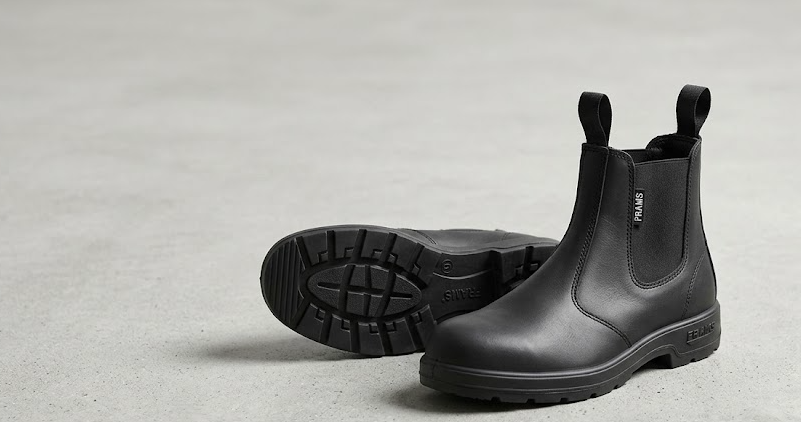
1. Why are Frams safety shoes a trusted choice in South Africa?
Frams is one of South Africa’s leading safety footwear brands, known for producing reliable, highly economical work boots. Manufactured specifically for the budget constraints of the African workforce, Frams uses direct-injection molded Polyurethane (PU) soles and genuine leather uppers. This construction provides long-lasting protection for contractors and large industrial workforces without sacrificing safety. Every shoe is manufactured in ISO 9001 certified facilities to ensure strict quality consistency. By focusing on durable, affordable local manufacturing, Frams delivers defensive work boots that keep cost-per-worker low while keeping teams safe.
2. Are Frams safety boots and shoes SABS approved?
Yes, compliance is standard across the Frams brand. All Frams safety boots and shoes are manufactured to fully comply with SANS/ISO 20345 safety footwear standards. This certification guarantees that the footwear has passed rigid tests for impact resistance, compression limits, and slip thresholds. Furthermore, Frams is a member of the Southern African Footwear & Leather Industries Association (SAFLIA). Providing your team with ISO 20345 approved Frams boots ensures full legal compliance with the South African Occupational Health and Safety (OHS) Act, removing compliance stress entirely.
3. What level of protection do Frams steel tip shoes provide?
The steel toe caps integrated into Frams safety shoes are made to withstand an impact load of up to 200 Joules. This means the cap protects toes from a heavy 20kg object falling from a height of one meter. Additionally, the steel caps resist compression forces up to 15 kilonewtons (kN), protecting workers from rolling hazards or heavy machinery. Frams fits these steel tips seamlessly beneath the genuine leather uppers, ensuring the protective barrier never rubs uncomfortably against the foot during long shifts.
4. What is the difference between single and dual density PU soles?
Frams utilizes direct-injection Polyurethane (PU) soles in two configurations. Single density soles (like the Frams Chelsea) feature a uniform PU layer, offering lightweight flexibility and excellent economy alongside baseline resistance to oils and acids. Geo Dual Density soles (like the Ndlovu range) feature two distinct layers. The inner midsole is made of softer, low-density PU to absorb shock and reduce leg fatigue. The rugged outer outsole skin uses high-density PU, optimized for superior abrasion wear, puncture protection, and slip resistance on rough terrains.
5. Can Frams safety boots withstand exposure to oils and acids?
Yes, Frams safety footwear features specialized polyurethane outsoles that offer excellent resistance to oils, greases, and mild industrial acids. The direct-injection PU compound is chemically structured to resist breaking down, swelling, or cracking when exposed to chemical spills common in workshops, engineering bays, and warehouses. This specialized protection ensures the sole retains its structural shape and slip resistance over time. While highly resilient against daily spills, safety managers should reference the Frams resistance chart for environments with highly concentrated, corrosive chemicals(certain oils and chemicals) please refer to the table for more information.